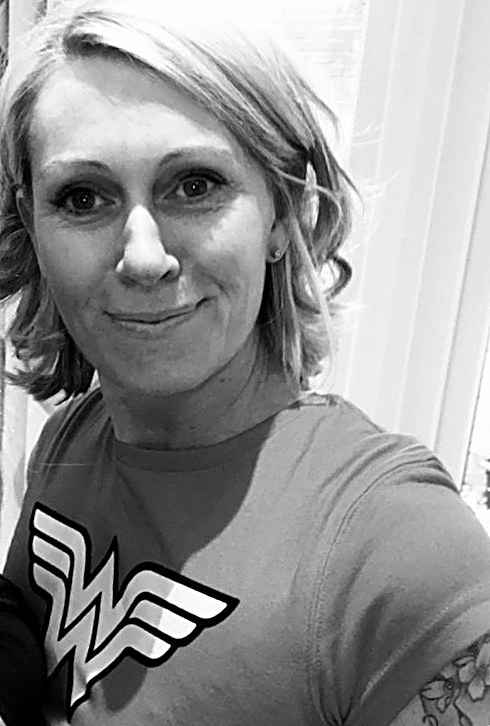
Collette Easton
Leadership planning workshop · 2027

Silly props. Funny jokes. Serious planning.

Change is being forced on all of us. Spreadsheets and AI won’t decide how you respond. Your people will. Let’s spend a day supercharging your people and your planning process.

Length
4 hours
Shape
2 × 2-hour sessions
In the middle
Lunch
Afterwards
A social, perhaps
A boardroom table laid out with workshop props: an inflatable rainbow unicorn, sacks of gold coins, gold bars, play money, a knight’s sword and a ‘Well done’ medal
Exhibit A: the 2027 planning table
Why laughter belongs in the room

Somewhere around 23, most of us stop laughing.

Gallup asked 1.4 million people in 166 countries whether they’d smiled or laughed a lot the day before. The answer drops sharply once people start work.1 Stanford’s Jennifer Aaker and Naomi Bagdonas call it the humour cliff.2

Illustration of the humour cliff: laughter is high in childhood and early adulthood, then drops sharply around age 23 when people start work. AGE ~23 · START WORK CHILDHOOD RETIREMENT Laughed a lot yesterday
Illustrative shape, after Gallup data cited by Aaker & Bagdonas

That’s a problem for any leadership team trying to plan well, because planning only works if people say what they actually think. As Apple’s former head of marketing communications Hiroki Asai put it:

“Fear kills creativity.”2
What the research says
136 studies

22,000+ people · 5,000 teams

Safe to speak up, better results. Where people feel safe to say what they think, teams learn more, share more and perform better.3

54 meetings

Real teams · tracked for 2 years

Shared laughter, better plans. Humour and laughter together sparked new solutions and more structure, and predicted team performance two years later.4

25 years

102 results · one meta-analysis

Good mood, more ideas. Positive moods make people more creative, and work best when the task feels like fun.5

Laughter also releases oxytocin, which helps people bond and trust each other.2 Leaders with even an average sense of humour are seen as 27% more motivating, and their teams are 15% more engaged.1 Across workplace studies, humour is linked to better performance, stronger teams, and less stress and burnout.6

We’re not reframing critical planning conversations and adding jokes to make planning bearable. We use humour because it helps people speak up, and when they speak up you get a better plan.

And it works!

Who’s in the room

Two facilitators. One very memorable morning, and an afternoon.

Executive coach Collette Easton and strategy consultant Matt Roberts will join you to run what we believe is the best, most memorable four-hour planning workshop anyone has ever attended. The kind your team still talks about years later.

You plan 2027 with the tools the best-run companies in the world use. We just teach them in a way people remember.

Critical conversations reframed are the spark

Yes, there are games and reframed conversations like...

  • Unicorns love Rainbows
  • You’re going to want to sit down for this
  • Becoming a Time Lord
  • Strategy Bingo
  • How Much for Your Arse Soul
  • Taking Part That Counts
  • Non-trivial goal pursuit
  • It’s a deal, it’s a steal

Book a conversation and it will all make sense. Book a conversation

Nicky Wake, Don’t Panic
“This is the most fun planning I have ever had. Every SLT needs to do this.”
Nicky Wake · Don’t Panic
Make no mistake

This is deadly serious planning.

The point is that planning doesn’t have to feel like a budget meeting. It can be:

  • light-hearted
  • jargon-free
  • deeply reflective
  • interactive
  • sometimes a bit black-mirror
  • impactful

And you leave with:

  • new skills
  • new ideas
  • obvious decisions
  • increased belief
  • urgency
  • clear priorities
  • better templates
  • and of course, a planning party bag

You can learn and plan through laughter.

After the day

What comes next for you after we leave?

You should be inspired and energised. You will need to keep the momentum going.

  • →Involve your teams.
  • →Write your goals down.
  • →Use what we’ve shared with you to pursue those goals more effectively.
The shape of the day

One day. Four hours of work. Lunch in the middle.

  1. Session one2 hours
  2. BreakLunch
  3. Session two2 hours
  4. OptionalA social
Your facilitators

A coach and a strategist, in the same room.

Collette Easton, executive coach
Executive coach

Collette Easton

Three-time CEO who built and sold three companies over twenty years. Association for Coaching accredited executive coach to founders and senior leaders.

About Collette’s coaching →
Matt Roberts, strategy consultant
Strategy consultant

Matt Roberts

Strategy consultant who helps leadership teams turn a year’s worth of ambition into goals, habits and a plan people stick to.

Read Matt’s blog →
Fair questions

Before you book.

Is this a team-building day with a plan bolted on?

No. It’s a planning workshop. The games and props are how we teach serious tools so they stick. You leave with a 2027 plan your team believes in.

What does the day look like?

Two two-hour sessions with lunch in the middle. If you want a social afterwards, we’ll plan for it.

Will people actually laugh?

Yes. We don’t force it, though. The format does the work: games, odd objects and plain language make it easier for people to say what they think.

What happens on the call?

We ask where your team is, what 2027 needs to look like, and who’ll be in the room. Then we tell you honestly whether the workshop fits. We might even explain the monkey’s bum.

The next step

Make 2027 the year you planned properly.

Book a short call with Collette and Matt. Tell us about your team, and we’ll tell you how the day would work for you.

Sources
  1. McKinsey Author Talks: Jennifer Aaker and Naomi Bagdonas, Somebody tell a joke.
  2. Stanford Graduate School of Business, Humor: Serious Business.
  3. Frazier, M. L., Fainshmidt, S., Klinger, R. L., Pezeshkan, A. & Vracheva, V. (2017). Psychological safety: a meta-analytic review and extension. Personnel Psychology, 70(1), 113–165.
  4. Lehmann-Willenbrock, N. & Allen, J. A. (2014). How fun are your meetings? Investigating the relationship between humor patterns in team interactions and team performance. Journal of Applied Psychology, 99(6), 1278–1287.
  5. Baas, M., De Dreu, C. K. W. & Nijstad, B. A. (2008). A meta-analysis of 25 years of mood–creativity research. Psychological Bulletin, 134(6), 779–806.
  6. Mesmer-Magnus, J., Glew, D. J. & Viswesvaran, C. (2012). A meta-analysis of positive humor in the workplace. Journal of Managerial Psychology, 27(2). Summary: QIC-WD.